Slovenia Digital Nomad Visa: Requirements, Application Process, and Updates for 2026

Table of contents

- Does Slovenia Have a Digital Nomad Visa?
- The Current Status of Digital Nomads with a Slovenian Visa
- Digital Nomad Visa: How It Works and What’s the Difference?
- Requirements to Obtain the Digital Nomad Visa
- Does Nomad Visa Equal a Residence Permit?
- Slovenia Digital Nomad Visa Income Requirement
- Living in Slovenia as a Digital Nomad
- Internet and Connectivity for Digital Nomads in Slovenia
- Slovenia Digital Nomad Visa News and Updates
Share
Share
Yesim virtual SIM card for travelers
Get a 10% discount for your first purchase with the code
Any freelancer who likes nature and peace has considered Slovenia for a long-term stay. This is a great Balkan country for calm living and low expenses. While freelancers could not enter it freely before, the situation changed on the 21st of November 2025.
The government finally introduced the Slovenia digital nomad visa for remote employees. It is a good chance to live in Europe, although you must meet high-income requirements. Read this guide to check if you can apply for this visa.
Does Slovenia Have a Digital Nomad Visa?
For many years, remote workers had no legal way to stay in the country for a long period without working for local companies. Instead, they had to receive tourist visas or look for local jobs, not the best idea for a digital nomad.
On November 21, 2025, the state introduced changes. Since that moment, Slovenia digital nomad visa 2026 became a reality – a separate program for temporary immigrants who work remotely or own businesses abroad. Now, you can officially live here without working for a local company.
The Current Status of Digital Nomads with a Slovenian Visa
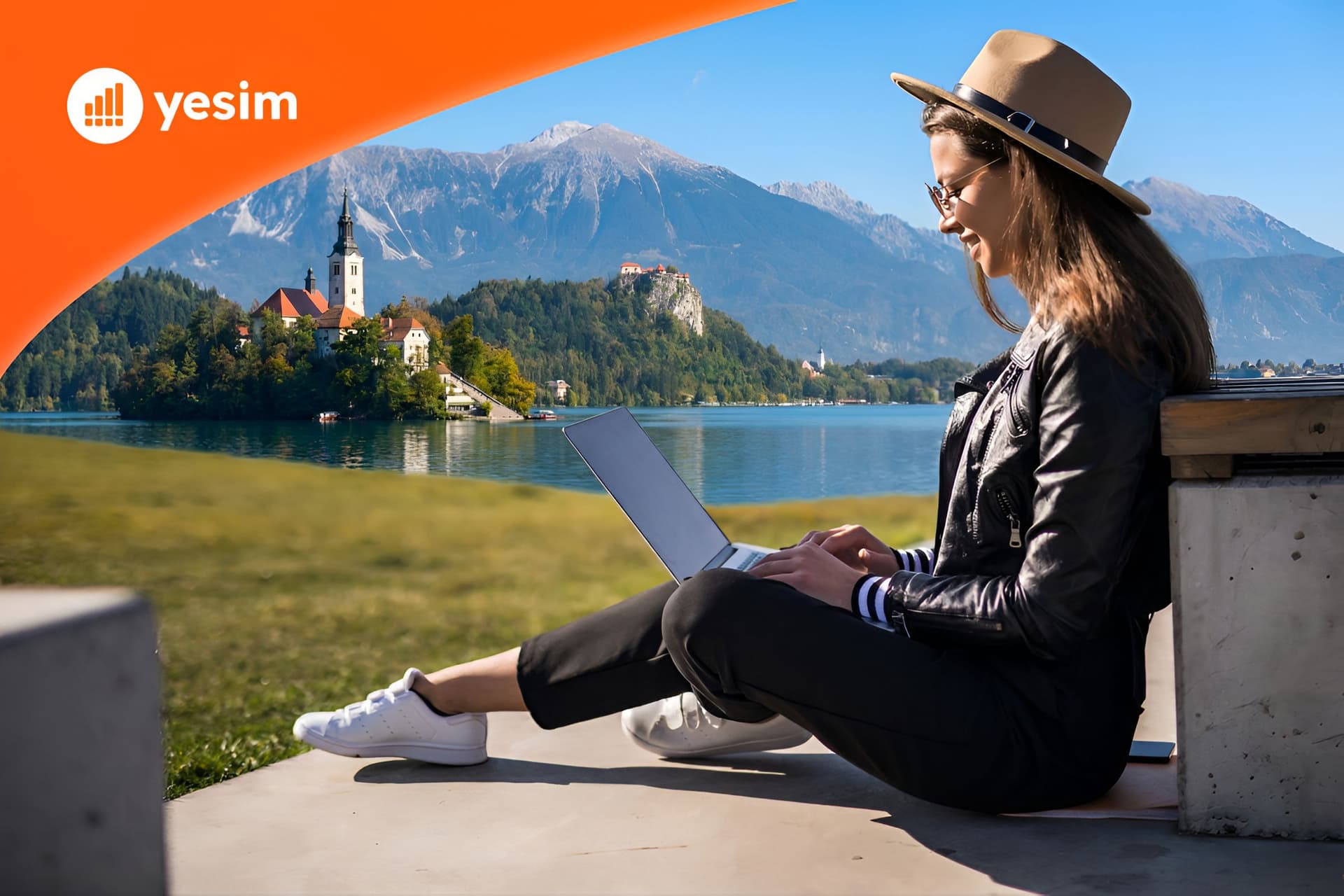
The new law defines a digital nomad as a foreigner who works remotely using communication technology. To qualify, you must be employed by a company registered outside Slovenia or have your own business abroad. The status of a sole proprietor works as well. This status gives you the right to reside in the country, yet strictly forbids selling services to local Slovenian clients or employers. You are here to live, not to compete with the local labor market.
Does Nomad Visa Equal a Residence Permit?
Many users confuse a simple visa with a residence card. Technically, the digital nomad visa Slovenia program allows you to live in a country like a resident, but there’s a key difference. The obvious drawback is the lack of renewal options. After 12 months, you have to leave the country for at least 6 months.
Digital Nomad Visa: How It Works and What’s the Difference?
A digital nomad visa is a special residence permit designed for people who work remotely using telecommunications – basically, a desktop or a phone to stay connected and work remotely. It allows you to live in a foreign country legally while receiving income from abroad. Travelers who asked – does Slovenia have a digital nomad visa 2026, should know that the answer changed. Now, you can stay in the Schengen Zone longer. There are more differences to learn:
- Time limit. For example, a visa for tourists is valid for only 90 days. A work visa is active while you’re working in the country. Meanwhile, the digital nomad pass lasts for 12 months.
- Source of income. Standard work permits require a contract with a local employer, but nomad visas strictly forbid working for local companies. Neither you nor your family can work in Slovenia.
- Tax obligations. Tourists rarely pay taxes, but nomads often become tax residents if they stay in the country for more than six months. In Slovenia, the range is 16%–50%.
- Family members. The new format allows you to bring family members (wife, husband, children, and parents) to Slovenia, yet they cannot work there.
Most European countries follow these general principles to attract foreign capital. The key is inviting new specialists who pay taxes, but do not take jobs away from the locals.
Requirements to Obtain the Digital Nomad Visa
The government established strict criteria for this permit, and they are fully active. You cannot just show some savings in your bank account like in other countries. The immigration office checks every document to ensure you are a high-income specialist.
Proof of Remote Work or Freelance
You must prove that your job is physically outside Slovenia. The authorities require a valid employment contract with a foreign company or a certificate of business registration if you are self-employed:
- Employees. Prepare a letter from your HR stating you can work remotely.
- Freelancers. Show contracts with clients outside Slovenia that prove a steady flow of tasks.
Basically, your money must come from anywhere but Slovenia. If you have even one Slovenian client, you are not eligible for this Slovenia digital nomad visa requirements list.
Income
This is the hardest part for most applicants. The law requires you to earn at least two average monthly salaries. In 2026, the Slovenia digital nomad visa income requirement is approximately €3,200–€3,300 per month. To prove so, prepare two papers:
- Bank statements. You need to show regular transfers for the last 6 months.
- Payslips. That’s an official document detailing your monthly salary.
They check the gross or net amount depending on your tax residency, but the final sum landing in your account must meet this high standard.
Health Insurance
Slovenia digital nomad visa 2026 requirements state that your policy must cover emergency medical costs for the entire duration of your stay. You cannot use a cheap travel insurance card.
Make sure the policy clearly states that it works in the Schengen Zone and specifically in Slovenia; otherwise, the officer will ask you to buy a new one. The insurance must cover hospitalization and transportation as well.
Accommodation
Find accommodation, at least a temporary one, before you cross the border. The consulate asks for a registered address for the first few months:
- Rental agreement. A signed contract with a landlord.
- Hotel booking. A short-term reservation for the first weeks in the country.
It is better to find a real apartment, as authorities often check if you actually live there during the registration process.
Clean Criminal Record
You must prove you are not a danger to public order. This document is mandatory for every applicant over 18 years old. Prepare an official police clearance from your home country – it must be translated into Slovenian and apostilled. If the document is older than three months, the officers will likely reject it, so get a fresh one before the appointment.
Read also: Residence Permit and Permanent Residence: 5 Key Differences
Slovenia Digital Nomad Visa Income Requirement
The financial bar for this permit is higher than in many other EU countries. You must earn at least two average gross monthly salaries, which currently equals around €3,200. Verify this by submitting bank statements for the last six months showing a stable cash flow.
Freelancers, startup founders, and sole proprietors are all eligible, provided the funds come strictly from foreign sources. If your income falls below this limit, the immigration office will likely reject your application.

Application Procedure for Digital Nomads in Slovenia
Unfortunately, the procedure is not fully digital, so be prepared to visit some institutions. You cannot simply upload scans and wait. The Slovenia digital nomad visa application process implies 5 steps:
- Gather all the papers. Your passport, health insurance, income proof, and other required documents must be printed and certified by a notary.
- Visit the office. If you are not in Slovenia, visit the local embassy and submit the papers. It may happen that you are in Slovenia as a tourist or non-visa visit (true for UK citizens) right now. In this case, visit the local Administrative Unit – sometimes it fastens the process.
- Provide papers, prove your identity, and pay. Provide your fingerprints and papers, and pay the administrative costs. The application fee costs around 100 EUR and can differ depending on your personal situation.
- Wait and be patient. The processing time takes around one-three months. Sometimes it takes longer – just be patient.
- Pick up the card. Once approved, you must collect your physical residence permit in person.
Be ready that the embassy might ask for additional interviews. The bureaucracy here is old-school, so it is better to have hard copies of every single document you submit.
Slovenia Digital Nomad Visa vs Other European Countries
Which destination you should aim for depends on your ultimate objective. Slovenia is a safe haven, but many of its neighbors offer better tax and resident conditions:
- Croatia. That is the more budget-friendly option, which will cost you about €3,295 per month. Nomads in this part of the country are not asked to pay local income tax, and that is a big benefit. Plus, you can stay there for up to 18 months, whereas with Slovenia it’s capped at 12 months.
- Spain. This is the long-term relocation champion. Spain requests ~€2,700 and will give you a 3-year renewable visa that ends in citizenship. After that, you can request two more years and then apply for permanent residency further down the road. Some of the other terms are identical to those in Slovenia.
- Portugal. Based on your income, the country provides 1-year and 2-year visas. Be ready to make more, since the minimum wage for qualifying for the visa is €3,680. When you have spent 5 years in the country, you can apply for your permanent residency.
- Estonia. The most rigorous level, commanding €4,500 a month. It has the same 1-year limitation as Slovenia, but it is entirely digital bureaucracy. There may also be both long-term and short-term residency.
So, is Slovenia worth it? The country is perfect for a safe, nature-focused "gap year" in Central Europe. However, it is objectively weaker than its competitors for financial reasons. The inability to renew the visa after 12 months and the lack of tax incentives make it a poor choice compared to Southern Europe.
Taxes for Digital Nomads in Slovenia
Obtaining a residence permit does not automatically make you a tax resident, but living there effectively does. The Slovenia digital nomad visa 2026 official fiscal system is rather aggressive. Once you are considered a resident, you are liable for taxes on your worldwide income, not just what you earn locally.
Prepare for the 183-Day Rule
The main trap for nomads is the duration of their stay. If you physically spend more than 183 days in Slovenia within a calendar year, the Financial Administration claims you as a tax resident. Thus, you have to pay taxes on the income from all countries. Consequently, staying for the full duration of your one-year visa guarantees you will fall into this tax trap.
More Obligations to Prepare For
Slovenia has a progressive tax scale that can hit your wallet hard compared to other EU havens. Rates vary significantly depending on your earnings. The income tax after 183 days ranges from 16% up to 50% for high earners. Plus, you might owe contributions if not covered elsewhere. This is significantly more expensive than the flat tax rates offered in Croatia or Spain.
Disclaimer: Consult a Specialist
As every employee and freelancer has different sources of income, the best idea is to hire a financial consultant. This article is for general use only and should not be used as your financial guide. Be ready for differences in laws depending on your situation, and consult the specialist before submitting any papers.
Read also: Top 10 Best Countries to Relocate To
Living in Slovenia as a Digital Nomad
Compared to Western Europe, Slovenia is quite cheap, yet it is not a budget destination among other Balkan countries. You should know the real prices and conditions before you move your tax residency here.
Cost of Living
The “Cost of Living” portal says that a single person needs around 800 EUR (without rent price) to live a month in Slovenia. Meanwhile, a one-bedroom apartment in Ljubljana costs between €700 and €900 per month, not including utilities. A regular meal in a restaurant is around €15, while a coffee is €2.50.
Internet and Infrastructure
The technical conditions are reliable. Fiber optic connections are standard in cities, offering speeds of 100 Mbps or higher. Mobile coverage is excellent, with 5G available in 98% of the populated territory.
Public transport is clean but often slow, so having a car is necessary if you plan to live outside the capital or travel to the mountains.
Safety
This is objectively one of the safest countries in the world. The Global Peace Index consistently ranks Slovenia in the top 10. Street crime is almost non-existent, and you can walk alone at night without any fear.
Climate
Be ready for quick weather changes. Fog and rain are normal conditions for the capital. Yet, distant towns and villages are sunnier. If your condition is highly dependent on the weather, be prepared.
Convenience for Remote Work
Most of the young generation speaks English freely. As for workplaces, coworking offices provide good networking opportunities for around €150 per month.
Internet and Connectivity for Digital Nomads in Slovenia
Now that you know whether Slovenia has a digital nomad visa 2026, it is time to think about practical aspects. Connectivity is essential for remote workers. Slovenia is renowned for its 5G Internet and fast Wi-Fi.
For better connectivity, consider eSIM technologies. This analog of a plastic SIM card allows you to use the Slovenian Internet without losing your native phone number. Choose Yesim, the best eSIM for Slovenia, and explore this beautiful country with stable internet access.
The price per month varies from 30 to 50 USD, depending on the plan type and the amount of data. You may choose prepaid plans or unlimited connection options. Current eSIM providers also offer virtual phone numbers to make calls without roaming fees.
Travel Across Europe and the World
Embedded SIM allows you to travel to other European countries without losing connection. It is a great opportunity to see other Balkan countries during your one-year stay in Slovenia.
For example, a 30-day plan of 81 USD allows you to travel across all the Balkan countries, while your provider automatically switches among the best SIM services. If you plan to see more destinations, consider world plans or the EU packages.
Ensure Safety
While plastic SIM cards can be damaged, lost, or stolen, eSIM plans are downloaded directly into your phone. The plan cannot disappear or be stolen. Providers use SSL encryption to protect your personal information and financial data.
Multi-Device Use
Finally, eSIM is a great choice for multi-device users, as the same plan can be used on both your phone and laptop. While Wi-Fi may be cheaper, it only covers your rented apartment or a hotel – eSIM is available everywhere.
Slovenia Digital Nomad Visa News and Updates
Once the state created a new visa format, the rules have not changed. If you’re interested in the current situation (the first half of 2026), simply read the regulations introduced on November 21, 2025. According to them, a digital nomad visa gives a 12-month residence permit for freelancers and remote workers. However, regulations may change. Stay updated, read the news, and be emotionally prepared for updates.
Conclusion
If you’re dreaming of living in Europe, traveling, and working remotely, Slovenia is a great choice. You can settle for a year and work wherever you like, except for Slovenian employees. Yet, if you plan to live in one country for a long period (longer than 12 months), consider other options. Unfortunately, any nomad has to leave the country for at least 6 months after the visa expires.
No matter what, stay updated about the Slovenia digital nomad visa news and see how the rules change. Now, it is a great temporary destination, yet a poor choice for those who want to settle with a family.
Share
Share
FAQ
Who is eligible for the Slovenia digital nomad visa?
To qualify, you must work remotely for a company registered outside Slovenia or own a business abroad. Freelancers and sole proprietors are eligible, but you cannot provide services to Slovenian clients during your stay.
What documents are required to apply for the Slovenia digital nomad visa?
Applicants need a valid passport, proof of remote work (employment letter or client contracts), bank statements showing sufficient income, health insurance covering the Schengen Zone, accommodation proof, and a clean criminal record.
How much income do I need to qualify for this visa?
You must earn at least two average Slovenian monthly salaries, around €3,200–€3,300 per month, verified through bank statements and payslips from the last six months.
Can I bring my family to Slovenia on this visa?
Yes, your spouse, children, or parents can accompany you. However, family members are not allowed to work in Slovenia under this visa.
How long is the Slovenia digital nomad visa valid, and can I extend it?
The visa grants a 12-month stay with no renewal options. After 12 months, you must leave Slovenia for at least six months before reapplying.
Recommended eSIMs

Pay & Fly
Unlimited data. Pay as you go
Europe & UK eSIM
33 countries
Balkans eSIM
11 countries
France eSIM
from $1.88 / day
Germany eSIM
from $1.88 / day

United Kingdom eSIM
from $1.88 / day
Italy eSIM
from $1.88 / day
Netherlands eSIM
from $1.72 / day
Denmark eSIM
from $1.72 / day
Finland eSIM
from $1.72 / day
Spain eSIM
from $1.88 / day
Greece eSIM
from $1.72 / day
Croatia eSIM
from $1.72 / day
Portugal eSIM
from $1.72 / day
Czech Republic eSIM
from $1.72 / day
Slovenia eSIM
from $1.72 / day
Romania eSIM
from $1.72 / day