
Celebrate Chinese New Year 2026: When and How to Celebrate it


Share
Share
Yesim virtual SIM card for China
Get a 10% discount for your first purchase with the code
Chinese New Year 2026 falls on February 17, the first day of the Year of the Horse on the traditional Chinese lunisolar calendar.
You may have heard of it as Chinese New Year, Lunar New Year, or the Spring Festival. As more than 1.4B people celebrate it around the globe and call it differently. Yet it is still the most significant new year festival on the Chinese calendar, and one of the largest public holidays on earth.
If you're traveling to join the festivities, or watching them unfold across multiple cities and time zones, one thing will define your experience more than you'd expect: mobile connectivity. This article will cover what you need to know about Chinese New Year 2026, and how to make sure you're not fumbling with SIM cards when the fireworks start.
What is Chinese New Year?
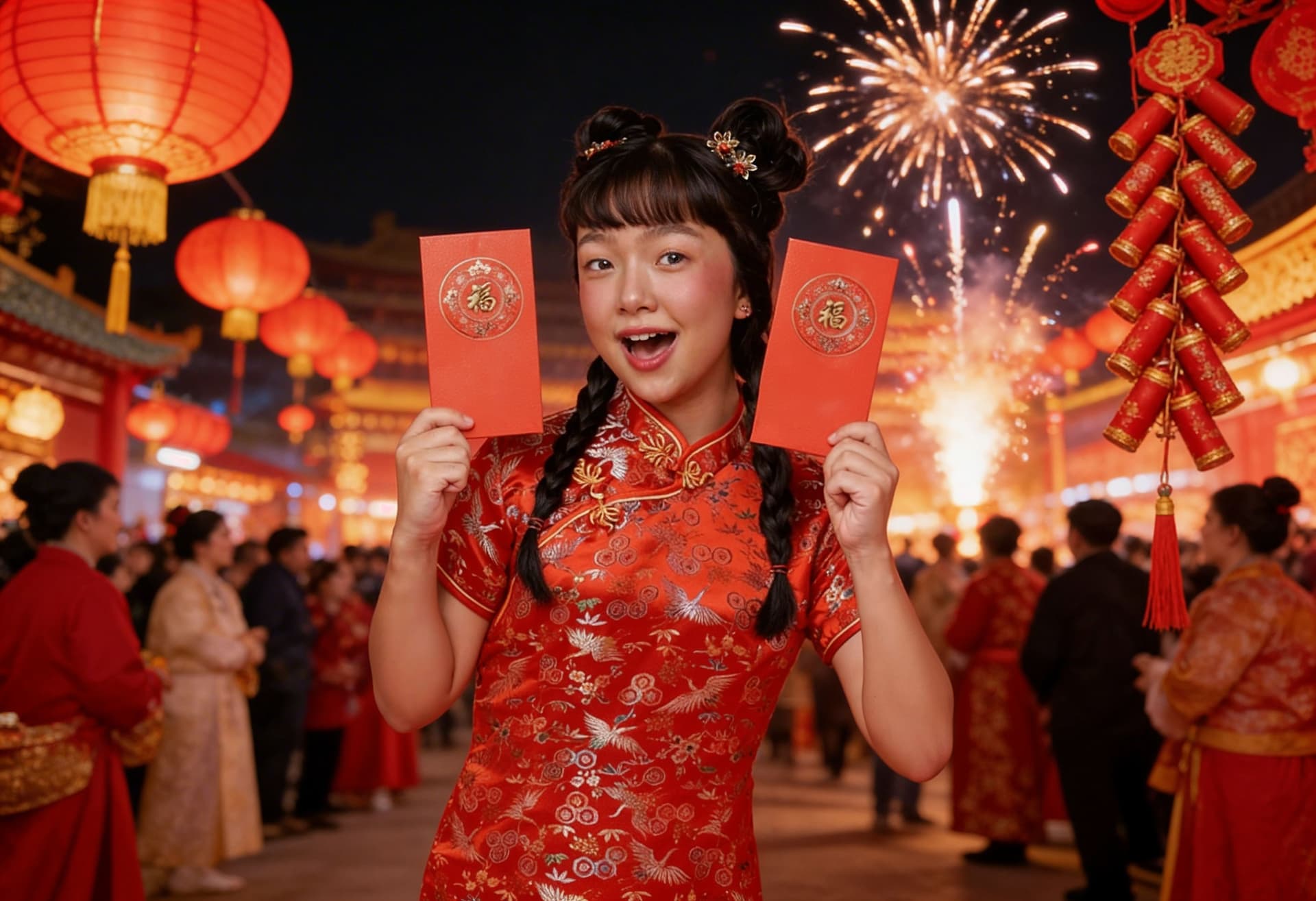
Chinese New Year is officially known as the Spring Festival (春节 in Chinese character). It's the new year celebration based on the Chinese lunisolar calendar – a traditional Chinese calendar system that tracks both solar and lunar cycles, distinct from the Gregorian calendar most of the world uses today.
The Chinese New Year festival marks the beginning of a new year in Chinese culture, rooted in thousands of years of ancient Chinese tradition. Many Chinese people treat it the way Westerners treat Christmas and New Year combined: the one time of year the whole family gathers.
Chinese New Year is officially a public holiday in China (7 days), Taiwan (9 days), Singapore, Malaysia, Indonesia, South Korea, Vietnam, and several other countries. In cities with significant Chinese populations Chinese New Year celebrations fill the streets even where it isn't a national holiday.
When is Chinese New Year?
Chinese New Year 2026 is February 17, 2026. The date changes every year because the Chinese lunar calendar doesn't align with the Gregorian calendar. Chinese New Year always falls on the second new moon after the winter solstice, the new moon that marks the first day of the new year on the traditional Chinese calendar. This puts it somewhere between January 21 and February 20 each year.
| Year | Date | Zodiac Animal |
| 2024 | February 10 | Dragon |
| 2025 | January 29 | Snake |
| 2026 | February 17 | Horse |
| 2027 | February 6 | Goat |
| 2028 | January 26 | Monkey |
| 2029 | February 13 | Rooster |
| 2030 | February 3 | Dog |
| 2031 | January 23 | Pig |
| 2032 | February 11 | Rat |
| 2033 | January 31 | Ox |
| 2034 | February 19 | Tiger |
| 2035 | February 8 | Rabbit |
The day before Chinese New Year, February 16, 2026, is Chinese New Year's Eve, also called Lunar New Year's Eve. This is when families gather for the new year's eve dinner, the central tradition of the entire festival.
🇭🇰 Read also: Mobile Internet and SIM Cards for Hong Kong
2026 Chinese zodiac: the Year of the Horse
According to the Chinese zodiac, each year is associated with one of twelve animals that cycle in sequence. The 2026 Chinese zodiac sign is the Horse, the seventh animal in the cycle.
The Chinese New Year is associated with its zodiac animal in multiple ways: décor, gift-giving, predictions for the coming year, and cultural meaning all shift based on the new year animal. Many Chinese people born in a Horse year (1930, 1942, 1954, 1966, 1978, 1990, 2002, 2014, 2026) are said to be energetic, independent, and decisive.
The Chinese zodiac sign replaced the Year of the Snake (2025) and will itself give way to the Goat in 2027. The zodiac animal appears everywhere during Chinese New Year celebrations on red envelopes, store decorations, temple displays, and the Chinese New Year parade floats in cities from Beijing to San Francisco.
How long is Chinese New Year?
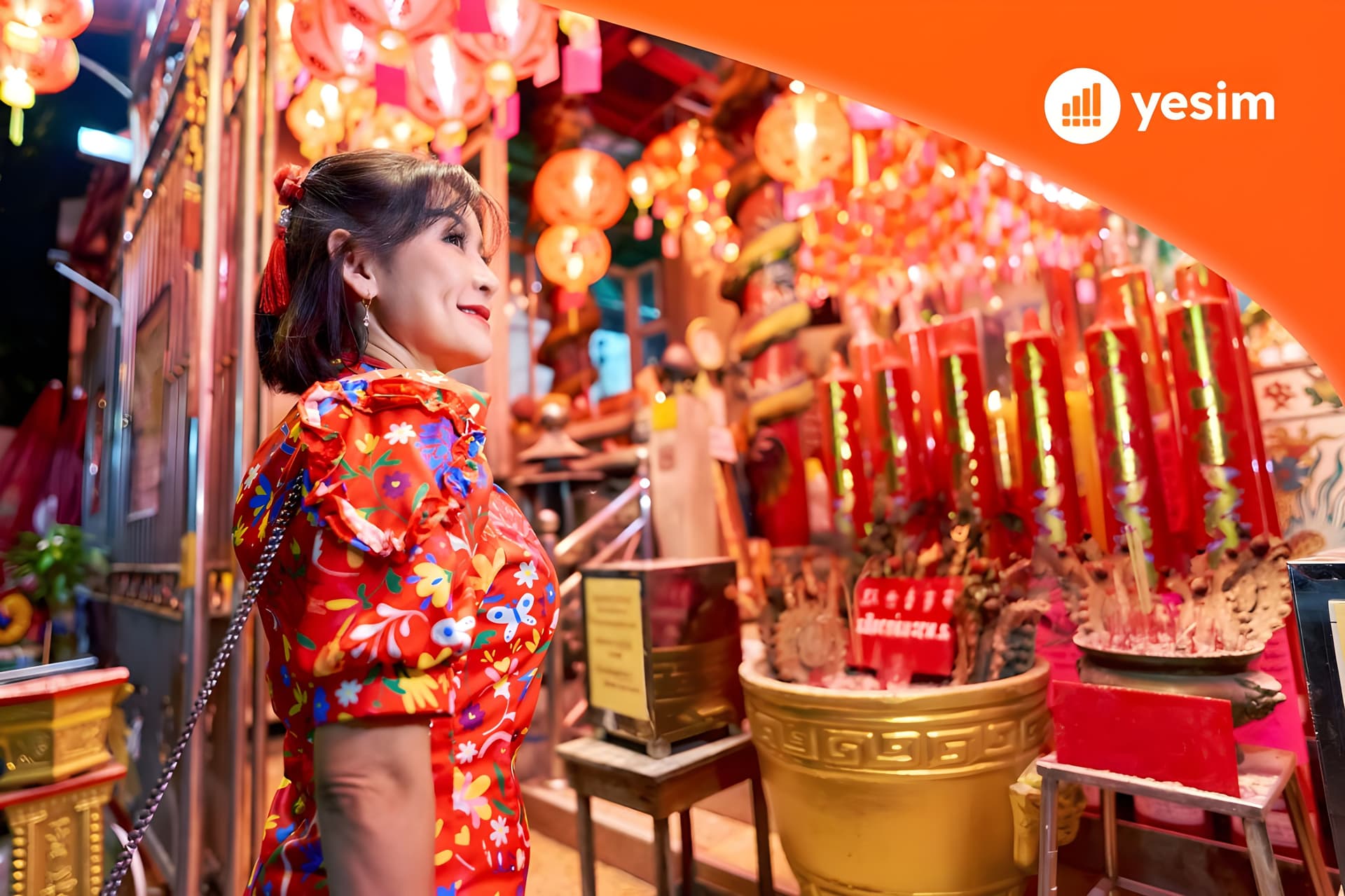
The Chinese New Year festival officially runs for 15 days, from Chinese New Year's Day (February 17) through the Lantern Festival on March 3, 2026. Every lunar new year follows a similar structure:
- Day 1 (Feb 17) — Chinese New Year's Day: The first day of the new year. Families visit elders, exchange red envelopes (hóngbāo), and avoid cleaning, sweeping on this day is said to sweep away the luck of the preceding year.
- Days 2–6: Family visits continue. China sees the world's largest annual migration as many Chinese people travel back to home provinces for the new year's tradition of reunion.
- Day 7: According to ancient Chinese legend, this is the day humans were created, celebrated as everyone's collective birthday.
- Day 15 — Lantern Festival: The final day. Lanterns are lit, families eat tangyuan (sweet rice balls), and the new year festival closes with the first full moon of the new lunar year.
New year is a time for family, food, generosity, and welcoming the new and every day has its own customs rooted in thousands of years of Chinese tradition.
What are the main Chinese New Year traditions?

Chinese New Year traditions date back more than 3,500 years, rooted in ancient Chinese agricultural cycles and folk religion. Many Chinese New Year activities have stayed largely unchanged across generations.
- New Year's Eve dinner (Lunar New Year's Eve): The most important meal of the year. Families gather for dishes with symbolic meaning: fish (surplus), dumplings (wealth), glutinous rice cake (progress). The day before Chinese New Year is when travel peaks hardest as people rush home.
- Red envelopes (hóngbāo): Elders give children red envelopes filled with money. The Chinese word for the color red (红) connects to luck and celebration in Chinese culture. Digital red envelopes via WeChat have become equally common in modern Chinese communities.
- Fireworks and firecrackers: Set off at midnight on Chinese New Year's Eve and throughout the first days. In Chinese tradition, the noise drives away evil spirits from the old year.
- Lion and dragon dances: Common at Chinese New Year parades and street celebrations across China and Chinese communities worldwide.
- Temple visits: On Chinese New Year's Day and the days following, many Chinese people visit temples to pray for luck in the coming year.
- Spring cleaning: Done before Chinese New Year's Eve,cleaning the house before the new year sweeps away the old year's misfortune. Cleaning on the first day of the new year risks sweeping away good luck.

Where is Chinese New Year celebrated?
Chinese New Year is celebrated in China and Chinese communities around the world. The Chinese population outside mainland China, often called overseas Chinese or ethnic Chinese, numbers over 60 million across Southeast Asia, the Americas, Europe, and Australia. Many of these communities celebrate Chinese New Year as a central part of Chinese cultural identity.
| Location | What happens |
| Mainland China | 7-day public holiday; hundreds of millions travel — the world's largest annual migration |
| Hong Kong | Street parade, fireworks over Victoria Harbour, 3-day public holiday |
| Taiwan | 9-day public holiday; temple fairs, lantern displays |
| Singapore | Public holiday; River Hongbao festival, light-up along the Singapore River |
| San Francisco | San Francisco Chinese New Year Parade — founded in 1860, the largest Chinese New Year parade outside Asia |
| London | Trafalgar Square and Chinatown celebrations |
| Sydney | Lunar New Year festival in Chinatown |
| Kuala Lumpur | 15-day public celebration; significant overseas Chinese community events |
Significant Chinese communities in every major city treat Chinese New Year as a central cultural event, even where it isn't a formal public holiday. The Asian lunar new year now draws broader participation too, many non-Chinese communities across Asia and the West join the lunar new year festival and celebrate lunar new year alongside Chinese neighbors.
What is the Chinese lunisolar calendar?
The traditional Chinese calendar, also called the Chinese lunisolar calendar or Chinese lunar calendar, is one of the oldest calendar systems still in use. Unlike the Gregorian calendar (which tracks only the sun), the Chinese lunisolar calendar tracks both lunar months and the solar year, adding an extra month periodically to stay aligned with the seasons.
China officially adopted the Gregorian calendar in 1912, but the traditional Chinese calendar remains the basis for Chinese New Year, the Lantern Festival, and other key dates in Chinese culture. Many Chinese people follow both, the Gregorian calendar for work and legal life, the Chinese calendar for festivals and family events.
The Chinese New Year falls on the second new moon after the winter solstice each year. The new moon, when the moon is invisible, marks the first day of each lunar month, and the second new moon after winter solstice marks the beginning of a new year on the traditional Chinese calendar.
This lunisolar structure is also why certain Chinese communities celebrate two new year's eve dinners, the standard Chinese New Year's Eve and the Hokkien New Year, which falls on the ninth day and is particularly significant for ethnic Chinese in Malaysia, Singapore, and parts of southern China.
Chinese New Year: what's different this year?
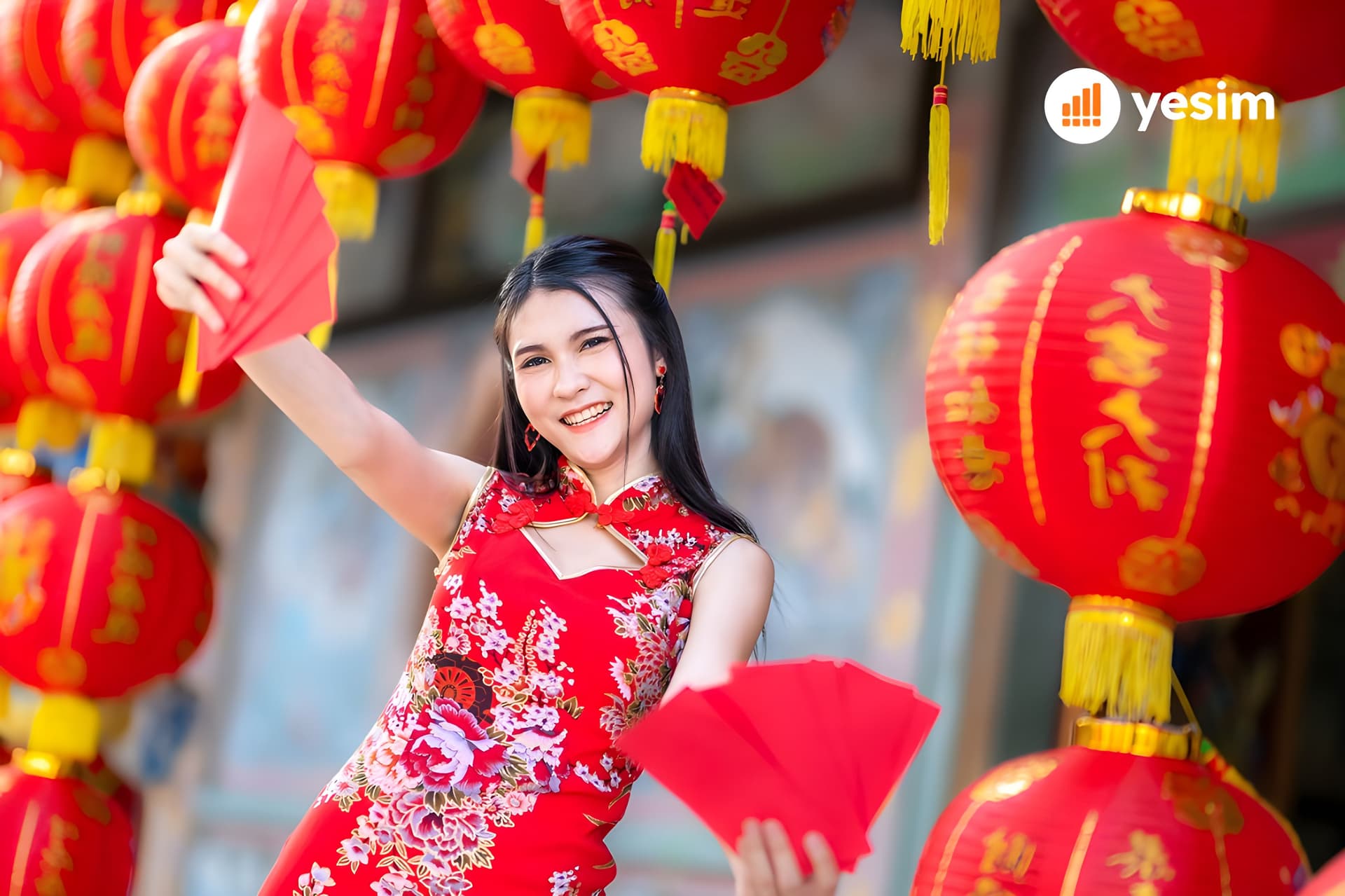
Chinese New Year 2026 will be the first Year of the Horse since 2014. Horse years in Chinese tradition are associated with action and forward momentum – a contrast to the more cautious energy attributed to the Year of the Snake (2025).
For China, the spring festival travel rush (春运, chūnyùn) in 2026 will again be one of the largest coordinated human movements on earth. In 2025, Chinese authorities tracked over 9 billion trips during the spring festival period. The 2026 numbers are expected to match or exceed this.
Internationally, Chinese New Year celebrations have continued expanding. The San Francisco Chinese New Year Parade, the largest Chinese New Year parade in the world outside Asia, draws over 100 crowds and televises to a global audience. London's Chinatown hosts one of Europe's most significant Chinese New Year festivals. In cities from Toronto to Melbourne to Dubai, Chinese New Year activities have become civic events as much as cultural ones.
Happy Lunar New Year, 新年快乐, is the Chinese word greeting you'll hear everywhere from February 17 onward.
🇨🇳 Read also: Mobile Internet in China
Traveling for Chinese New Year?
If you're heading to China or any country for the new year celebrations, connectivity is worth sorting before you fly. Chinese New Year 2026 means peak travel – packed airports, long SIM queues at arrivals, and potentially three countries in fifteen days if you're celebrating properly.
Yesim handles the connectivity part. One International eSIM for China + 200 other destinations, one data balance you top up once and use everywhere: no installing a new plan at every border, no confusion about which eSIM is active when you need directions at midnight on Chinese New Year's Eve. Now that's handled – go enjoy the dumplings.
新年快乐 — Happy Chinese New Year. May this year bring you good travels, fast connections, and plenty of red envelopes!
Share
Share
FAQ
How many days is Chinese New Year celebrated?
Chinese New Year is celebrated for two weeks, in 2024 the celebrations will take place from February 10 to 24.
What is the Chinese New Year greeting?
The most common greeting is 新年快乐 (Xīnnián kuàilè) – Happy New Year. 恭喜发财 (Gōngxǐ fācái), meaning "wishing you prosperity," is equally popular. Both are used throughout the 15-day Spring Festival, from Chinese New Year's Eve through the Lantern Festival on March 3.
What should you avoid doing on Chinese New Year's Day?
Don't clean the house, sweeping on the first day of the new year is believed to sweep away the luck of the preceding year. Many Chinese people also avoid washing hair, using scissors, and arguing, all considered bad omens for the coming year.
What food is eaten on Chinese New Year's Eve?
The reunion dinner centers on symbolic dishes: fish (年鱼) for surplus, dumplings for wealth, spring rolls for prosperity, and glutinous rice cake (年糕) for progress year on year. The specific dishes vary by region, but the reunion meal itself is the non-negotiable tradition across all Chinese communities.
Is Chinese New Year a public holiday outside China?
Yes, Chinese New Year is a public holiday in Taiwan, Singapore, Malaysia, Indonesia, South Korea, Vietnam, and the Philippines, among others. In cities like San Francisco and London it isn't an official public holiday, but large-scale Chinese New Year celebrations and parades still draw hundreds of thousands.
Recommended eSIMs

Pay & Fly
Unlimited data. Pay as you go
Asia Pacific eSIM
15 countries
South East Asia eSIM
8 countries
China eSIM
from $2.24 / day

Hong Kong eSIM
from $1.96 / day

Macau eSIM
from $3.56 / day

Malaysia eSIM
from $1.72 / day
South Korea eSIM
from $2.20 / day

Japan eSIM
from $2.20 / day

Indonesia eSIM
from $1.88 / day
Vietnam eSIM
from $2 / day

Philippines eSIM
from $1.68 / day
Thailand eSIM
from $1.52 / day